Read the blog
It’s okay if… (a few reminders for tough times)
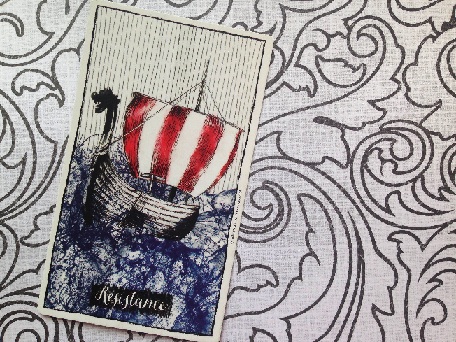
card from Alchemist’s Oracle
Whatever you’re struggling with…it’s okay.
It’s okay if one day is great, and the next day is crap. No one can bring their A-game 24/7. Productive, inspiring days will sometimes be followed by slothful, self-sabotaging days. Take ownership for your bad days, but don’t beat yourself up for having them.
It’s okay if you slipped back into an old negative pattern. Making new patterns of behavior permanent is HARD. But if you’ve made that inner shift and know you want to change, a slip is just that – a slip. It doesn’t mean your progress is ruined. Remind yourself of why you’re easing into new patterns and keep slowly going in the right direction.
It’s okay if you’re not sure what you believe. Labels are seductive. We like to neatly divide belief systems into categories: Christian, Atheist, Pagan, etc etc etc. If identifying with a belief label works for you, that’s great. But if you’re not sure where you fall, it’s okay to be uncategorized.
It’s okay if you feel overwhelmed. The whole ‘being a human’ thing can be a lot to handle. Jobs, dreams, losses, the daily news, responsibilities…it’s okay if you sometimes feel like the Ten of Wands. It’s okay to prioritize what is truly essential and let everything else fall by the wayside.
It’s okay if you don’t know what you’re doing with your life. The secret truth is that almost no one does. We’re all just feeling our way forward, hoping for the best. As long as you’re dedicated to self-discovery, truth-telling and curiosity – you’re doing it right.
It’s okay if you aren’t always positive. My friend Kelly-Ann Maddox recently talked about asking if something is useful instead of asking if it is positive, and Danielle Laporte talks about the “euphoria of admitting something sucks.” You don’t have to ostracize negative thoughts from your mental plane. Instead, ask if they might actually be valuable.
It’s okay if you suspect what you’ve done sucks. If you attempt anything creative – even something as innocuous as cooking a new recipe or trying your hand at a Pinterest project -chances are at some point you’ll think your output sucks. First, you should know that your inner critic is harsher than any external critic. Next, you should know that everyone’s work sucks sometimes. Sucking is a sign that you’re actually DOING something, and that doesn’t suck at all.
It’s okay if you’re hella resistant. On one hand, you might feel deeply pulled to do a certain thing – to start a business, to become healthier, to engage in a creative act – but on the other hand, you might also feel deeply pulled to do ANYTHING OTHER THAN THAT THING. Resistance is a very real, very powerful force – but if you are truly devoted, you can learn to do your thing even when resistance insists on tagging along.
It’s okay if you aren’t ALWAYS aligned with your higher consciousness. You’re probably fairly on board with abundance mindset, collaboration not comparison, love not fear and all that jazz. It’s okay, though, if you do witness yourself operating from a place of scarcity and ego.
“Enlightenment” is not a static state – it’s something dynamic, something you shift in and out of, and that’s okay.
(tweet this)
It’s okay if you are a jumble of contradictions, oddities and flaws. It seems to me that the universe is made up of opposites. Chaos and order, expansion and contraction, creation and destruction. Your psyche just might be a microcosm of this macrocosm, and that’s more than okay – that’s pretty fucking magical.
Wanna face forward and create space for further transformation? Setting Your Theme for 2016 readings are available now.
If you liked this post, you might also like…
You suck and that’s awesome!
Resistance & the War of Art

Book a private reading with me here.
Subscribe to receive my {free} monthly e-gazette & four {free} guided tarot meditations.
Wild Unknown Tarot :: Use of Lines (video)
Hey Wild Ones,
I finished blogging through the entire Wild Unknown Tarot deck card by card, but of course, I still have lots to say about this deck!
This is the first in a new video series! In this series, I’ll be looking at groups of cards and further exploring the symbolism, messages and meanings. Today, I’m talking about the use of lines in the Wild Unknown tarot.
If you’re forging your own bond with this gorgeous deck, I hope this video will provide some interesting perspectives to consider! I’m always intrigued to hear your thoughts, as well. Please do leave me a comment if you feel so inclined!
Until next time, stay wild.
Book a private reading with me here.
Subscribe to receive my {free} monthly e-gazette & four {free} guided tarot meditations.
Hollow victories, winning without winning, and the replenishing of creative energy
It all began with believing I am magical, which is often (but not always) a healthy belief.
I knew that November would be a busy month. There’s Happy Fish Tarot, of course – blog posts to write, videos to make, Skype sessions and email readings with clients. There’s no question that my business is my top priority. It feeds my soul, and it is simply non-negotiable!
Then there were other things to keep me busy. Paperwork as I buy my first home. A trip to Los Angeles. Hosting a photo challenge on Instagram. Yes, November was already shaping up to be a full month. Full of amazingness and wonder, but full nonetheless. And even knowing all of this, I still tried to prod “write a novel” into this pile of to-dos.
At the beginning of November, I told myself “you are an infinitely creative being. You are magical! You’ve got untapped volumes of creative life force surging through your depths! Your well shall never run dry! You can create, create, CREATE!”
Now, I still believe these sentiments wholeheartedly. But I left out one crucial element from that thought train:
Our creative wells need to be replenished regularly.
We can’t just give, give, give, give and give. We have to fill the well. We have to recuperate and recharge.
For a few days now, I’ve been falling gravely behind on my NaNoWriMo (National Novel Writing Month) word count. When I have sat down to write, I stare blankly at the screen. It is not that I feel blocked or afraid, it is that I have nothing left to give. I’ve poured all my creative energy into other avenues, and there is no fuel left for this novel.
At first, I felt ashamed. I mean, I did write a pretty epic three part series to help people prepare for NaNoWriMo… and now I can’t even finish my OWN novel? I told myself that I HAD to finish, because if I don’t, I will be a hypocrite. And so I forced myself to keep writing, but the story refused to progress. The flow was gone, dry, fished barren.
I mean, I COULD keep writing. But what I would be writing would be hollow, meaningless junk. Words for the sake of words. Words brought forth with an energy of exhaustion and force. But I could do it. I could write 50,000 words and “win” NaNoWriMo. Would that really be a victory, though?
It would be a hollow victory. A victory that doesn’t come with any feelings of triumph.
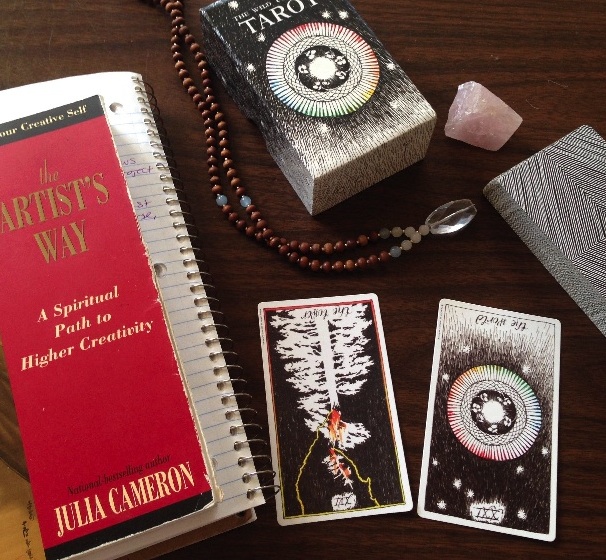
This morning I gave myself a two card reading, and the messages that came through illuminated my novel-writing woes. I drew the Tower and the World, both reversed, from the Wild Unknown tarot.
As these are both major arcana cards, they both affirm that I am being presented with important life lessons. As they are both reversed, they affirm that I am still resisting these life lessons.
The Tower shows the state of my novel: disintegrating, going down in flames. But the reversal shows my ego’s desire to cling to the project, to deny the crumbling, to ignore the deeper lessons that are available in this situation. My soul, though, knows that something within me can be cracked open through this experience. I can either deny the chaos of the Tower, or I can take an active hand in the dismantling. I can choose to destroy my novel writing attempts with dignity, or I can fruitlessly resist the inevitable blow to my ego.
The World reminds me that winning isn’t really about “winning.” It is only my ego that insists that in order to win, I must write 50,000 words in November, come hell or high water. It is my ego that thinks I will not be complete unless I insist on stubbornly riding this burning project even as it continues to crash. It is my ego that feels shame that my creative energy cannot perform upon command, infinitely, without ever being tended to.
This all still feels a little raw. I still feel some shame. I still feel a smidgen of temptation to keep going, to force myself to crank out 15,000 more words. But… deep breath… I need to remind myself that it is not a hollow victory I am seeking.
There are times to push through. There are times to revive self-discipline, to stick things through, to doggedly keep the commitments you’ve made. And then there are times like this. Times when you must realize that you can’t do it all. You’re not a machine. Your creative energy must be respected and replenished.
There are times to humble your ego, to let the crash happen.
Resistantly so, I am facing one of those times. I have nothing left to give to this novel, and that does not need to induce shame. The kindest thing to do for my novel and for myself is to let it disintegrate.
This will leave me reeling for a while, and that’s okay. I will listen to the signs and become replenished. I will be respectful of myself and of the Universe’s lessons. I’ll ask my ego to please play nice. I am still magical. I am still accomplished, I am still whole.
That feels like a genuine victory.
Book a private reading with me here.
Subscribe to receive my {free} monthly e-gazette & four {free} guided tarot meditations.
Who are you creating for? (video)
Hello wondrous, bad ass creatures!
Another video from Carrie?! Yes indeed. November has been all about videos! That’s largely because, as you already know if you’ve read my blog at all within the past couple of weeks, I’m participating in National Novel Writing Month! Making videos gives me a chance to ease up on all the write, write, writing.
In this video, I’m talking to you about a creative block I recently encountered (again). It’s something I thought I’d already dealt with, but you know how life lessons are… they tend to cycle back around, and we often have to relearn them from new angles.
After you’ve watched, I’m ever so curious to hear your thoughts. Is this a block you’ve ever encountered? Did anything I said resonate with you? Leave a comment below and tell me all about it.
Book a private reading with me here.
Subscribe to receive my {free} monthly e-gazette & four {free} guided tarot meditations.
Activating your strange jewels (a tarot spread)
Hello, magical creature!
If you’ve ever suspected that within you there are distinct creative gifts, but you’re not quiiite sure how to unearth them – this tarot spread is for you. I’m presenting it in a video format, because at the moment I’m in the thick of National Novel Writing Month, so my writing brain needed a break!
We all have innate creative strengths, but for many of us these “strange jewels” (as Elizabeth Gilbert calls them) seem inaccessible and hidden. This reading will guide you in unearthing and using your own strange jewels! You’ll get actionable tips on understanding your gifts and actively engaging your creativity.
If you try this spread, I’d love to hear your thoughts! Leave a comment and tell me what you learned.
This is one area where an outside perspective might prove incredibly useful. If you’d like me to give you some personalized tarot guidance to encourage you in activating your strange jewels, you can purchase this spread from me here.
Book a private reading with me here.
Subscribe to receive my {free} monthly e-gazette & four {free} guided tarot meditations.
It isn’t too late (a quick video message)
Hey guys,
Just a quick, unplanned, makeupless message from me to you. 🙂
Book a private reading with me here.
Subscribe to receive my {free} monthly e-gazette & four {free} guided tarot meditations.
From Nonexistent to Novel: Winning NaNoWriMo using Tarot (Part 3 of 3)
Ever dreamed about writing a novel? This November, move from dreaming to doing! National Novel Writing Month (NaNoWriMo) challenges you to write a 50,000 word novel during the 30 days of November.
In this three part series, I’m showing you how to prepare for NaNoWriMo from scratch. I’m not a published author, and I’m not a real writing teacher. I’m just a chick who has, with the aid of tarot, won NaNoWriMo five times (winning just means finishing, but that’s the best kind of winning). I want to help you do the same thing!
This is part three of the three part series. Find part one here and part two here.
Greetings, my fellow authors-in-training! We have reached the third and final portion of our nonexistent to novel journey. If you’ve gone through Part One and Part Two, you’ve gotten through the obvious parts of novel preparation – creating characters, fleshing out plot and ironing out various details of your story. We’re done with the nuts and bolts of story building.
Today, we’re talking about a different (but equally important) form of preparation: mindset. It’s not enough to have a polished outline and a clear vision of your story. You’ve also got to get into the right headspace and organize your life in a way that fosters your creativity. In this post, we’ll talk about grappling with your inner critic and maintaining your enthusiasm. We’ll also consider how you can arrange your affairs in a way that gives you the most time and energy possible to pour into your novel.
If this isn’t the first down you’ve sat down to write (or make art, or really do anything involved with living your life in a creative manner), you’ve probably already met your inner critic. It’s that voice inside of you that at best, doubts your ideas; and at worst, tells you your ideas suck. Every inner critic has their own temperament. Yours might be relatively mild, or it might be a downright jerk.
It’s important to remember that your inner critic does have good intentions, as hard as that may be to see sometimes. It wants you to improve, to grow, to learn. But even with those good intentions, sometimes your inner critic can result in perfectionism, procrastination and a lack of progress.
During NaNoWriMo, your inner critic can easily be your death sentence. You will be writing 50,000 words in one month – that’s a LOT of words! If you let your inner critic pester you too much about the quality, you flat out won’t be able to meet the quantity. Remind yourself and your inner critic that this draft of your novel WILL NOT be flawless, and that’s okay. Remember: choose progress over perfection.
Here’s an exercise that can help. Pick a tarot card to represent your inner critic. You could do this by shuffling and pulling a card, or you might already have one in mind. The Devil and the Knight of Swords are a couple that resonate for me. When you sit down to work on your novel, visualize that card’s energy moving out of you and taking a seat in the corner (you could take this a step further and literally PUT that card in the corner). Don’t let your inner critic interfere with your forward momentum!
If you decide to edit and revise your novel after November, your inner critic can become a valuable team member. You just need to train it to stop hurling insults and start giving proactive, constructive advice.
What kind of energy do you want to bring to your writing process? Do you want to sit down at your computer, dreading typing the next sentence? Do you want to tell yourself that you HAVE to write today? Do you want your novel to be one more obligation on your mile long to do list?
Or do you want writing to be a pleasurable experience? A break from your mundane world and a foray into your imagination? Do you want writing to be something you look forward to engaging in? Do you want writing to be an exciting outlet for your infinite creative energies?
The fact that I have a choice here was revolutionary for me, and it might be for you, too. You can choose what energy you want to bring to your novel. Go through your tarot deck and choose a card that reminds you of that energy (for me it’s often the Star or the Magician). Keep that card next to you while you’re writing. When you get stuck, imagine yourself taking on the energy of your chosen card, inspiring you to keep going.
One of the loveliest things about NaNoWriMo is the sense of community. Your novel is your special thing, but it’s magical to think that thousands of other people are on their own writing adventures at the same time. Check out the NaNoWriMo forums where you can celebrate your victories and vent out your sorrows with other burgeoning writers. There are even in-person events and write-ins you can attend! Celebrate other writers and let them celebrate you.
Be proud of each milestone you reach along the way, Four of Wands style! When you hit your first 5k, give yourself a treat. Same thing for 10k, and 15k…there’s always a reason to be proud of what you’ve accomplished.
It has come to my attention that most people have jobs, pets, chores, errands, families, friends and other such things to occupy their time. As much as we’d like to wake up and do nothing but write, write, write… that’s usually not an option. But since you know in advance that you want to concentrate on your novel in November, you can take some steps now to create as much time and space for writing as possible.
What outside responsibilities can possibly be rearranged or postponed during November? If you’re a busy person, you might have to make some sacrifices to make NaNoWriMo work. Put book club on hold, cancel bridge night, nix the Netflix. Those extra things can come back in December. If you have a full time job, you might want to consider getting up an hour earlier to write. Or writing on your lunch break. Right now, your focus should be carving out any extra slots of time for your novel.
What else can you do now to prepare for November? My husband and I have an annual tradition of hitting the bulk foods aisle at the end of October to stock up on snacks. Get your writing fuel ready! Make sure you have plenty of tea, coffee and food on hand. Do anything you can think of now that prevents you from running extra errands next month.
Let’s break this thing down. To write 50,000 words during November’s 30 days, you’ll need to write an average of 1667 words per day. To give you an idea of what that looks like, this blog post, including the introduction, is around 1694 words.
If you’ve never done NaNoWriMo before, why not give yourself a trial run? Open up your word document and do some sample writing (but don’t start your actual novel! That has to wait until November 1!). Notice your starting time and see how long it takes you to hit 1667 words.
This will help you understand how much time you’ll need to set aside each day. Of course, your pace will vary throughout the month, but it’s helpful to have a working idea of what this will look like. As an example, I’m a pretty fast writer and I can bust out my daily word count in about an hour on a good day.
(Side note: I always remind myself that American Thanksgiving takes place during November. If at all possible, I like to get ahead on my word count early in the month so that I can take a day off on the holiday.)
It will come as no surprise that I use tarot in every facet of my life. In our earlier posts, we used tarot to create our stories. Now, we’re going to use tarot to consider what we need to know about our upcoming adventures in authorship.
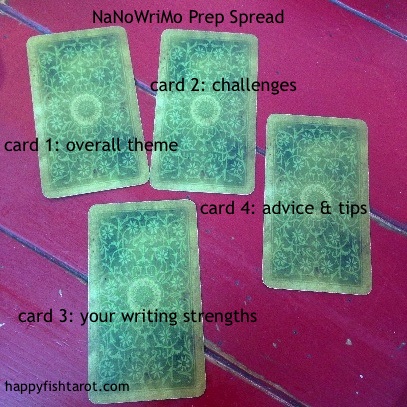
Shuffle your cards and try Carrie’s Famous NaNo Prep Tarot Spread. Card one represents the overall theme of your NaNoWriMo experience. Card two hints at challenges to be aware of as you progress on your journey. Card three reminds you of your own unique strengths that you can bring to the writing process. Card four gives overall advice and guidance for making the most of your NaNoWriMo experience.
This spread will give you interesting insight and help you set the tone for a meaningful month. If you try it out, make sure to leave a comment and let me know how it goes!
(If you’d like, you can also purchase a NaNoWriMo Prep reading from me. Keep in mind I’m only offering this particular reading until October 30, 2015. More details at the post’s end.)
In case no one else has told you this: you are a total badass. Countless people dream of writing, yet never follow that calling. But not you, my friend. You are going to DO this! There will be thrills. There will be face palms. There will be struggles and triumphs and struggles again. It’s going to be awesome!
I’m cheering for you. The Universe is cheering for you (listen closely). Get excited. Be proud. Even if you don’t quite feel like it, you’re ready. Above all else: just keep writing, just keep writing. Now…let’s DO THIS!
I want to hear from you! Leave me a comment and let me know how you’re feeling about your upcoming adventure. Have you implemented any of the tips from this series? How’s that going for you? Please do let me know – and would you do me a favor? If you know anyone who would enjoy this three part series, make sure to share the link with them! Thank you kindly.
Book a private reading with me here.
Subscribe to receive my {free} monthly e-gazette & four {free} guided tarot meditations.
From Nonexistent to Novel: Winning NaNoWriMo using Tarot (Part 2 of 3)
Ever dreamed about writing a novel? This November, move from dreaming to doing! National Novel Writing Month (NaNoWriMo) challenges you to write a 50,000 word novel during the 30 days of November.
In this three part series, I’m showing you how to prepare for NaNoWriMo from scratch. I’m not a published author, and I’m not a real writing teacher. I’m just a chick who has, with the aid of tarot, won NaNoWriMo five times (winning just means finishing, but that’s the best kind of winning). I want to help you do the same thing!
This is part two of the three part series. Find part one here.
Welcome to part two of our epic novel-writing prep series! In part one we talked about building the big, broad picture of your novel. After going through last week’s exercises and considering the input of your tarot deck, your novel should be starting to take shape.
At this point, you know what genre you’ll be writing. You’ve pulled some tarot cards to consider the whos and whats of your story. You’ve spent some time getting to know your characters, and you’ve wrangled together the bones of your plot. Now you’re ready to take those bones and slap on some flesh.
In today’s post, you’ll take your big, broad picture and paint in more of the details. You’ll look at fleshing out your plot, considering your story’s theme, and writing an outline. Then, you’ll come up with a quick and catchy way to describe your story to all the nosy people who will soon be asking about your novel!
It is fun to daydream about characters, settings, and other fanciful novel indulgences. But eventually, you’ve got to take all those notes and cook them into a coherent plot! What actually happens in your story? How does the action start, progress, and wind down? These are the questions you’ll be considering today.
In the previous post, I mentioned that there are countless ways to construct a plot, but they all generally have one thing in common: they require a beginning, middle and end! You’ve now done a three card spread in this vein, so you’ve got at least a baseline idea of how your plot proceeds. Now you can take that baseline and color in the gaps.
Let’s look at a few formats you can use to create plot. There are many other plotting theories you can consider, so don’t feel like you must use a tactic outlined here! The ideas I’m sharing with you are simply a couple of structures that might be useful jumping off points.
This is one of the most common, ancient, tried ‘n true ways to consider plot progression. The most basic way to think of the three act structure is a literal division of your story into beginning (act one), middle (act 2) and end (act 3). Here’s a more detailed view of what that might look like:
Act one: Beginning. In this act, the premise of your story is introduced. We get to know your characters and get a feel for their ordinary (pre-adventure) world. During this act, an inciting incident happens – this is the point where your main character moves from their ordinary world into the main action of the story.
Act two: Middle. This is where the bulk of the story unfolds! Your main character is now in the thick of whatever ordeals you bestow upon them. Challenges and setbacks are actively presented, and the characters struggle to meet their goals. At the end of act two, the darkest hour occurs. The greatest challenges must now be faced before the story finds resolution.
Act three: End. This is where things start to wind down. The main conflicts are resolved, and we see how the world and characters have transformed.
Joseph Campbell was a highly regarded scholar and all around bad ass. He studied world mythology and is most famous for presenting his ideas on the hero’s journey. The hero’s journey shows a basic plot progression that is present in countless stories from various cultures and time periods. Many modern stories align with the hero’s journey (including Star Wars and Harry Potter). Lots of people have given much more detailed and articulate explanations of this concept than I ever could, so I’ll keep it brief!
There are twelve stages to the hero’s journey progression. Each stage marks a progression in the plot as well as the character’s development: ordinary world, call to adventure, refusal of the call, meeting with the mentor, crossing the threshold, tests allies and enemies, new approach, the ordeal, the reward, road back, resurrection, and return with elixir. There’s a more detailed explanation here.
It’s time to get those tarot cards out again! Give them a good shuffle and then lay out twelve cards – one for each facet of the hero’s journey. Take ample notes on any new insights these cards give you into your story’s progression.
As fascinating as the hero’s journey is, it’s a lot to grapple with (especially when you’re trying to iron out your plot relatively quickly in anticipation of NaNoWriMo). The following is my favorite way to consider plot. I’ve plucked a few essential plot elements from various established structures. This format works well for me, and it might be useful for you, too. Have your tarot cards ready and I’ll show you my plot structure in the form of a tarot spread.
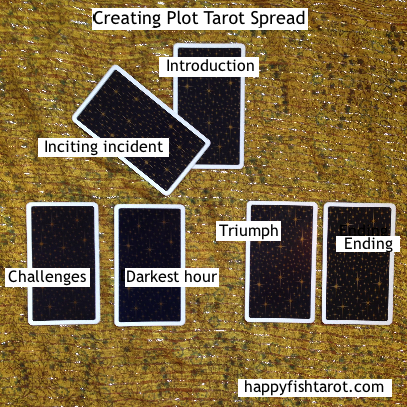
Card 1: Introduction, how the story begins.
Card 2: Inciting incident, how the action starts.
Card 3: Challenges, what gives the plot complexity.
Card 4: Darkest hour, where things hit rock bottom.
Card 5: Triumph, how the previous card is transcended.
Card 6: Ending, how the story winds down.
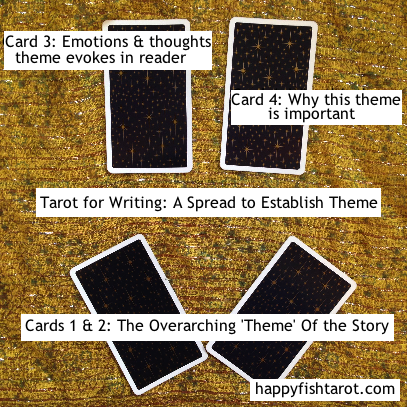
Before you jump into writing an outline, let’s take an intermission to consider theme. The plot is the actual series of events, challenges and happenings that go on throughout your story. The theme is what these things actually mean, teach or suggest. There are a lot of ways to think about theme, but I find it simplest to ask: what is the central message of my story? What message would I want a potential reader to walk away with?
Considering your theme is important because it can serve as an anchor for your writing. When you’re struggling to tie together your plot, focusing on the central message can help the next step become clear. Your theme can be as broad or narrow as you’d like. For example, my novel’s theme is the nuances of balance and self-actualization.
It’s time for another tarot spread! This one will give you inspiration as you contemplate your story’s central theme.
The world of NaNoWriMo is divided into two types of people: planners and pantsers. Planners are those who diligently map out their novels in advance, stockpiling notes and detailed outlines. Pantsers are those who fly by the seat of their pants, preparation be damned. If you’ve made it this far in my posts, you’ve got at least a bit of the planner spirit!
When it comes to writing an outline, I fall in the middle of the planner – pantser spectrum. It can be incredibly useful to have an outline as you start (gulp) actually writing your novel. An outline keeps you on track and ensures the story is going where you intend it to go. But most writers have had that experience of dutifully crafting an outline, only to find out that inspiration took them in new directions during the actual writing phase.
And so, my humble preference is to create a useable, guiding outline that still gives room for flexibility and eleventh hour changes. Here’s how I structure my outlines.
I start with a one sentence declaration of my theme. This goes at the very top of my outline document so that I can keep it in mind as I write. Then, I divide my plot into three acts, as we talked about earlier. From there, I simply write bullet points outlining what happens in each of these three acts. Sometimes I will have ideas for specific bits of dialogue, foreshadowing, or character development I want to include in different segments. If so, those go in the outline.
That’s it! Just a three act division and bullet points. It’s nothing fancy, but it works for me. If you’ve done the plot development tarot spreads above, you should have plenty of ammo to create an outline in whatever format appeals to you.
I attended a local kick-off party the first year I participated in NaNoWriMo. I met a lot of interesting people there, and each one of them asked me the same question. “So, what’s your novel about?” My response was a jumbled mess of “ahs” and “ums” followed by inarticulate ramblings and over-explanations. Yikes!
Of course, it’s natural to have a high level of “winging it” when it comes to NaNoWriMo, and you don’t need to have a succinct, perfect way to describe your novel. That being said, coming up with a one-sentence elevator pitch can be pretty dang fun, and it gives you a snappy way to respond to your inquisitors. I got this idea from Randy Ingermanson’s Snowflake Method, which you can read more about here.
Your sentence will be a pared down way to convey the central theme, challenges and intrigue of your story. It should give just enough information to pique curiosity. If you’re at a loss at how to go about this, think about describing the beginning, middle and end of your plot in broad terms. For example, my elevator pitch might go something like this: “When her father drowns, an unprepared girl attempts to fulfill the metaphysical responsibilities she never knew he had.”
A few years ago, I took a community ed writing class. I proceeded to quickly forget most everything I learned, but one thing the teacher said has always stuck with me. She talked about how when you’re working on a novel, your title can become your totem. While your novel is abstract and unwritten, your title can be a beacon guiding you towards creating something real. This really hit home for me, and I always like to have a title (or at least a working title) for my novel before I begin writing.
Of course, many authors do not have a title until their novel is well underway, or even until after it is completed. But if you feel drawn to the idea of title as totem, I recommend spending some time contemplating your title before NaNoWriMo begins. Having a title nailed down can make help novel seem real, inspiring and exciting!
Deep breath – whoooo boy! You’ve made it through part two of our three part series, and the hardest work is done! We’re through with the nuts and bolts of novel preparation, and next week we’ll focus mainly on mindset. We’ll talk about working with your inner critic, grappling with perfectionism, and creating the time and energy you need to write your novel. I’ll also give you some practical, straightforward ways you can organize your life and focus on write, write, writing in November.
I want to hear from you! Leave a comment and tell me how your preparation is going. What aspects are proving the most challenging so far? What’s going really well? If you tried the spreads and exercises above, how did they go? If you enjoyed this post, I’d be super thrilled if you share it with a writerly friend!
Until next time: keep on writing. Keep on kindling enthusiasm. November is going to be legendary!
Find part 3 of this series here!
Book a private reading with me here.
Subscribe to receive my {free} monthly e-gazette & four {free} guided tarot meditations.
From Nonexistent to Novel: Winning NaNoWriMo using Tarot (Part 1 of 3)
Picture yourself curled up on your favorite cozy sofa, a cup of tea by your side and a paperback in your hands. You’re feeling accomplished, fulfilled and grateful. When you look at the book in your hands, you see YOUR name on the cover. Yep, YOU wrote a book! You journeyed into the depths of your imagination and a story emerged. What was nonexistent became a novel. Woah, MAGIC!
I know how delightful the experience described above feels because it has happened to me. This November will mark my fifth time participating in National Novel Writing Month (NaNoWriMo). I haven’t been published, but I did get one of my novels printed as a tangible, physical book! If this is something you dream about, you can make it happen. This three part series will get you to the starting line. If you hang with me, by the end of November you’ll have finished a 50,000 word novel. All you need is an open mind and a tarot deck.
(Let me be clear: I’m not a professional author. I’m just a chick who has, with tarot as a companion, gone through the highs and lows of NaNoWriMo multiple times. I invite you to take my suggestions if they work for you, and leave them in the dust if they don’t.)
The great (and terrifying) thing about NaNoWriMo is the timeline. You’ve got one month to bust out a 50,000 word novel. Let’s get a few things out of the way right off the bat: your novel isn’t going to be perfect. But it can (and will) be rocket fuel for your creativity. Since you only have 30 days, you can’t mess around with overthinking and procrastinating. You’ve got to write, baby, write! The most important thing is to have fun and let your imagination run wild. We’ll talk more about this in Part 3, which will be all about your mindset and preparation.
Don’t you DARE tell me it’s too late for you to participate. You still have three weeks to get ready! If you follow along with me in this guide, you’ll have zero excuses not to write a novel next month. If this is something that calls to you…DO IT!
If you already have a story idea, this guide will help flesh it out. But if (like me) you have no idea what to write about, these posts will do what the title says: take you from nonexistent to novel. I’ll be going through the process with you (because right now, I have no idea what I’m going to write this year). I’ll share some of my insights with you in these posts, and I’d be tickled if you leave comments telling me about YOUR process. Let’s win NaNoWriMo together! By the way, if you’re a NaNo newb, “winning” just means finishing 50k words during November. But hey, finishing is the best kind of winning, right?
Now, let’s move into the heart of Part One!
In this post, we’ll talk about building the big, broad picture of your novel. By the time you go through these exercises, you’ll know your genre and five w’s. You’ll get better acquainted with your characters. You’ll form a overarching understanding of your plot. I’ll then give you a few pieces of optional homework to complete before we move into Part Two next week.
If you’re not sure what genre you want to write, I think it’s best to start by considering what you like to read. Start a brainstorming word document (or notebook) for your novel and journal on the following: picture yourself walking into your favorite bookstore. Which section do you gravitate towards? What kind of book would pique your interest? What would you be absolutely enthralled by, so much that you couldn’t wait to get home and sink into that sucker?
If you are consistently sucked into science fiction…write science fiction. If you’re ravished by romance…write romance. If you’re, like, YOLO for young adult thrillers, write young adult thrillers. I could go on, but you get the point. Write what you like reading. Things will flow better that way.
When I did this exercise for myself, I decided I’ll be writing middle grades fiction. This is what I read the most of, after all. When I pictured the kind of book I couldn’t resist in a bookstore, I had vague visions of trains, snow, fire and polished wood…and maybe even a circus? Hopefully you got some vague (or specific!) ideas, too. We’ll see how they take shape as we move forward.
Got your genre selected? Sweet! You’ve just made the first broad stroke on the canvas.
Remember learning about these guys in school? Yeah, the five w’s (plus that sneaky bastard h) are kind of cliché, but they are infinitely helpful. When you know the who, what, when, where, why and how of your novel, you’ve got a pretty good foundation to build from.
There are two ways you can go about this exercise. If you already have a concept for your novel, you may wish to jump right back into your brainstorming document and write about your five w’s. Come up with as many details as you can for each.
If you’re still feeling your way forward blindly (or if you just want to go even deeper into your existing ideas), it’s time to call upon your tarot deck. Shuffle your cards and draw one card (or more, if you’d like) for each category: who, what, when, where, why, how.
Start by looking at the spread’s overall scope. Do you see any themes already? For example, have you drawn multiple cards from the same suit, or multiple major arcana cards? Do you see any correlations in the images? Thinking about how your cards connect as a whole can spark some potent inspiration.
Three of the five cards I drew for my own novel were cups. This gave me the understanding that emotions, connections and relationships will play a major role in my novel. I only drew one major arcana card, and it came up in the ‘who’ position. This suggests to me that my plot will be very character-driven.
Once you’ve looked at the big picture, write out as much information as you can for your w’s and h. If you get stuck, shake it off. Go for a walk, or head to a comfortable coffee shop. Put on headphones and get in the zone. Don’t filter yourself, let any and all ideas flow. You can always cut things later.
When you’ve thrown around as many ideas as possible here, consider how all of this connects to start forming a plot. What story are you seeing in your cards? You don’t need to know absolute details, but things should be starting to come together. What does the overall theme and scope of your plot look like so far? Get all these insights on paper.
When you finish this exercise, you’ll have a more usable notion of what your story looks like. Your novel is now well on it’s way to being something real!
When you think about your favorite books, what makes them stand out to you? For me, it almost always comes down to the characters. Interesting, dynamic, complex characters draw us into their worlds. It may once again be pertinent for me to mention that I am not a teacher or a published author. But in my distinctly unprofessional opinion, it’s good to build your characters up before you get too wrapped up in creating your plot. If you’ve got strong characters, they will often take the lead, pulling the plot in directions you hadn’t even considered!
You should already have some ideas about your characters based on your ‘who’ from the previous exercise. Your novel might have a large numbered crew, or it might center on one crucial character. Authors can easily spend months creating their characters, but since we are trying to get ready for NaNoWriMo in three weeks, we’ve got to expedite things. I recommend deciding on 1-3 main characters to flesh out in-depth. If you have a lot of supporting characters, you probably only need a few sentences of information on them.
Start a section in your brainstorming journal for each of your main characters. Write down anything and everything you already know about this character. What are their most defining traits? What do they want? What obstacles do they face? What kind of attitude do they have? Where do they live? What makes them angry? What makes them happy? What moves them? What lurks in their subconscious?
The tarot’s court cards are often associated with people, personalities, or approaches to life. Which court card do you feel best represents this character and why? What traits does this court card have and how do they manifest in your character? You might also find it useful to compare your character to a person you know, or another fictional character. This isn’t to directly imitate, but rather to give you a basis for your character’s unique behavior.
Here’s a character creation tarot spread I originally posted last year. Between now and next week, do this spread for each of your characters. Keep detailed notes about any insights that come up.
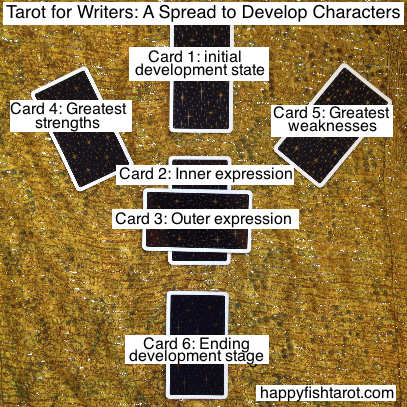
What’s in a name? I am a huge nerd when it comes to naming my characters. Having a name (both for a character, and a title for the book) makes something feel more real. However, it’s also easy to get hung up trying to find the perfect name and dwindle away precious time that should go towards developing your character’s personality. For NaNoWriMo, I think it’s best to use the first name that comes to mind (trust that intuition, yeah?), or you can use a temporary filler name (such as MC for main character).
Once you’ve done this work on your characters, come back to how they influence the plot. One of the most enjoyable things about writing is considering what kind of bizarre situations your characters will be thrust into, and how they will respond to those circumstances. This can largely influence the details of your plot.
In next week’s post, we’re going to talk more in-depth about plotting and outlining. But by now, you’ve already done a lot of the initial excavation. You’ve probably gleaned insight into your plot as you considered your w’s and your characters. Before we go too much further, let’s make sure you have at least a bare-bones overview of your story’s progression.
There are countless formats that can be used to consider plot. You can base your plot around the three act structure. You can use a hero’s journey format. You can do, really, whatever you please. But any way you go, you’ll need a beginning, middle and end. Focus on that for now.
Look back on what you’ve already achieved so far. Can you already see the beginning, middle and end taking shape? If so, great! Take some notes about that. If you’re still struggling to see an actual plot among your work, it’s time for some more tarot illumination. Get out your deck and draw three cards to represent the beginning, middle, and end of your plot.
Jot down what you see in these cards. Once again, look for similar themes. Do your cards tie in with those you drew for any previous exercises? Use these three cards, combined with the ideas you already had, and do your best to describe the beginning, middle and end of your story.
Whew! Okay, you are well on your way. You’ve got your genre, you have a basic idea of the beginning, middle and end of your plot. You’ve got some strong characters and things are starting to become real!
Make sure to check back next Tuesday for Part 2! We’ll be taking a more in depth look at plot. We’ll also talk about establishing the theme of your story. Then, we’ll put together a one sentence elevator pitch to describe your novel.
In the mean time, your homework is to register for NaNoWriMo and set up your profile. If you have friends who are also adventurous enough to write a novel in 30 days, you can add them as a writing buddy and track their progress once November starts (you can add me if you like, my username is happyfish).
Until next time, remember: stories have magic. Stories are transformative. You’ve got stories within you – it’s time to explore them and let them unfold in all their wild glory!
I want to hear from you! Leave me a comment and let me know how your process is going so far. Putting this series together has been a labor of love – any feedback you have would be wonderful. I’d also be INCREDIBLY thrilled if you share this post with anyone who might find it useful.
Part two of the series is here!
Book a private reading with me here.
Subscribe to receive my {free} monthly e-gazette & four {free} guided tarot meditations.
The (never ending, tempo-changing) dance of to-do and to-be
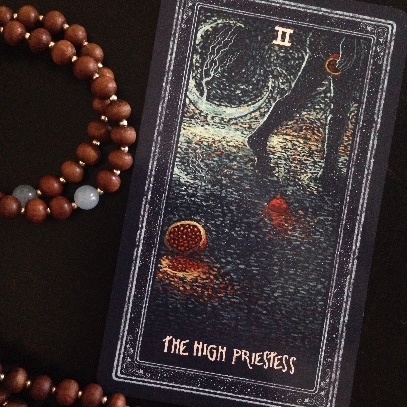
High Priestess :: Prisma Visions Tarot
There are a few lessons I grapple with again and again, always from slightly different perspectives. The dance of being and doing is one of those lessons.
You’d think I’d have this one on lock by now! Tarot is full of lessons about the dynamics of doing and being. I see examples of this duality everywhere: inhales and exhales. Sleeping and waking. Summer and winter.
But this week, this lesson is popping up for me again.
You see, I like getting things done. I am always thrilled to see tangible evidence that I’m making PROGRESS. I am a builder, I am a creator. I am a doer, dagnabbit! This year, more so than ever, I have been on a doing rampage. I’ve leveled up my organization and productivity. I’m consistently doing things that I used to just WISH I was consistent about (like writing blog posts!).
“Must do all the things!!” Has kinda been my motto lately.
And so naturally, I get down with to-do lists. Who DOESN’T love the feeling of checking completed tasks?! Lately I’ve been consistently making myself weekly and daily to-do lists. In many ways, this has changed my life for the better. Smart people are always saying to write your goals and ambitions down, breaking them into manageable chunks – and that’s what I’ve been up to.
All this doing is awesome…until it’s not.
Today, the Universe is re-teaching me a lesson I’ve learned many times: BEING is just as essential as doing. It happened as it often does: I tried all day to make myself go, go, do, do, do…
But then the maintenance guy stopped by my apartment. And then my internet quit working. And then Nanners sat on my to-do list and wouldn’t move (cats know). And then my ear got clogged with wax. As Oprah says, life talks to you in whispers, and if you ignore the whispers, life bops you over the head (or the ear, in my case). Everything around me, even the cloudy, fall weather – is asking me to just…chill for a while. Just be.
The High Priestess is my card for the month, and it coincides gorgeously with this need to place more value on being.
Doing and being cannot be divvied up into perfectly equal proportions: this is the angle of the lesson I’m learning right now. For a few weeks straight, I was knee-deep in doing energy and I was feeling great. Sometimes I’ll be in doing mode for weeks, months! But when being mode is required, it is required. I can’t schedule it in or ignore it. When I gotta be, I gotta be!
And right now, I am feeling the pull to BE.
While I sense the need, I am going to ease up on the to-do lists. Instead of focusing on what I need, want, should, and “have” to do, I’m going to focus a little more on how I want to be. Things like…
I will be aligned with my inner High Priestess.
I will be flexible.
I will be open to the ebbs as much as the flows.
I will be accommodating of my cycles.
I will be a receiver of wordless wisdom.
I will be when I must be, I will do when I must do.
I’m learning – slowly but surely – to do when I must do. To be when I must be. And to get down with the shifting dance between the two.
How do YOU navigate your doing and being energy? Which one is stronger for you right now? I’m curious to hear your thoughts, leave a comment and let me know.
Here are a few things I feel inspired to engage in with my “being” energy this week:
I am nerdily excited to try this Goddess Archetype tarot spread from Kim Huggens.
I want to BE the most intuitive, receptive, wise-woman mentor I can for my Growth Gatherings clients.
A local art museum is having a free admission day this week. My husband and I are going to visit and soak in the beauty.
I’ll be integrating the autumn vibes while camping in gorgeous Southern Utah this weekend.
Until we meet again, carry on BEING the magical creature that you are!
Book a private reading with me here.
Subscribe to receive my {free} monthly e-gazette & four {free} guided tarot meditations.
Carrie Mallon
Header art from The Spacious Tarot illustrated by Annie Ruygt
All site content © Carrie Mallon LLC 2014-2019
Sign up for weekly updates